Planing that leaves a surface ready to overlay.
Road planing removes the damaged surface course to a set depth and profile so new asphalt can bond straight to sound layers. Done accurately, it is the cheapest part of a resurfacing contract. Done badly, it ruins the rest.
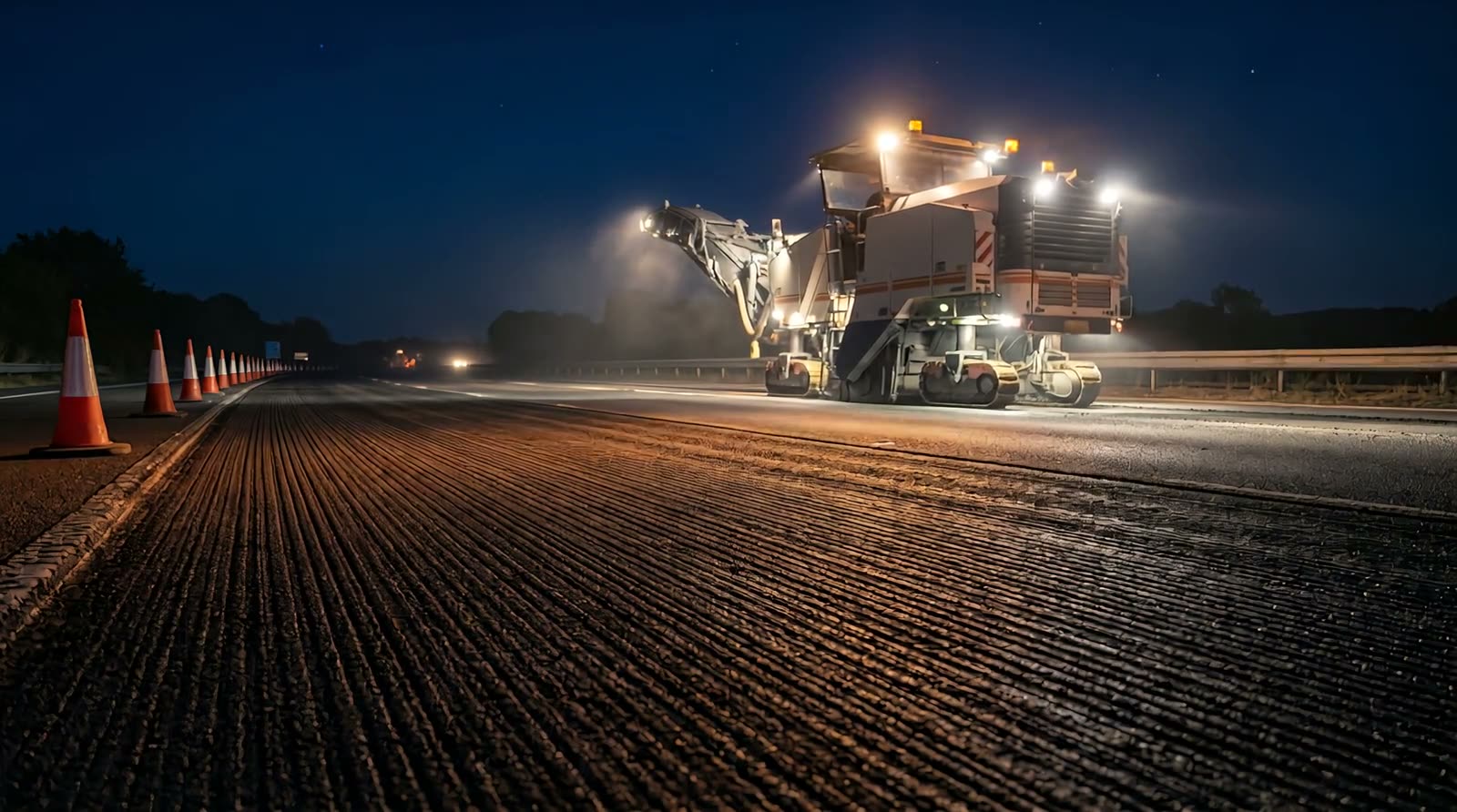
Planing, sometimes called milling, is the controlled removal of an asphalt surface. The machine skims the failed course to a specified depth, leaving a keyed surface at the right level for the new material. Depth control and a clean sweep afterwards are what separate a tidy overlay from one that fails at the joints.
Dinsdale Contracts runs planing as part of a joined-up operation: the planer takes the surface out, our own wagons haul the planings away, and our sweeper leaves the carriageway clean and ready. One contractor, one programme, no gaps between trades for a contract manager to chase.
The planings themselves have value. We collect and recycle them, and can supply planings as a cost-effective surfacing material for farm tracks, car parks and haul roads. If you need planings delivered rather than removed, our haulage service covers that too.
What's covered
- Surface course removal to specified depth and profile
- Planing for overlays, reconstruction and ironwork exposure
- Planings hauled away by our own tipper fleet
- Recycled planings supplied for tracks and hardstandings
- Swept, clean handover ready for the paving crew
Fair questions
Do you supply planings?
Yes. Recycled planings are a practical, economical surface for farm tracks, yards and haul roads, and we deliver them across Cumbria with our own wagons.
Can you plane and resurface as one contract?
That is the normal way we work. Planing, haulage, sweeping and surfacing come from one firm, so the carriageway is never left waiting between trades.
How much surface do you remove?
Whatever the design calls for. Typically the failed wearing course, around 40 millimetres, but the machine works to the depth the engineer specifies, checked as we go.